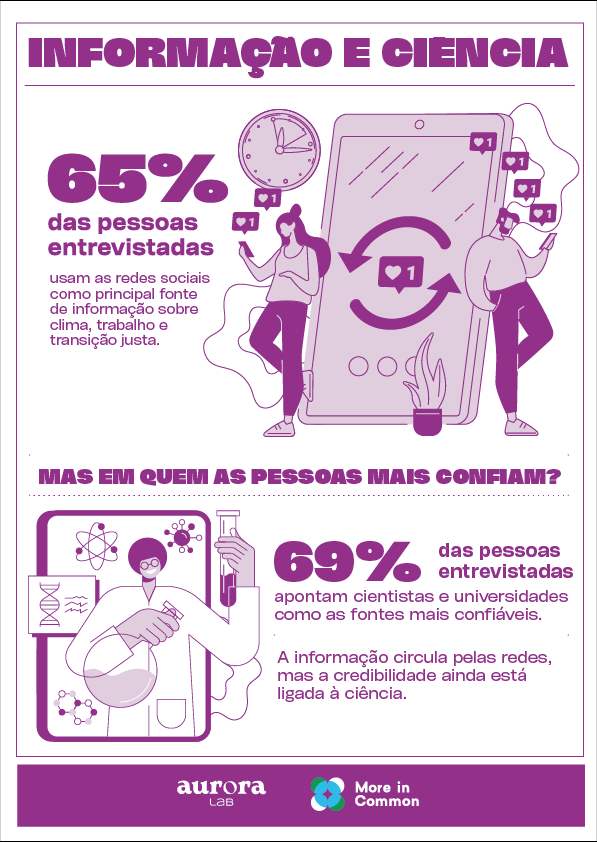
What do people interviewed in 9 Brazilian cities think about climate, work, and just transition?

To answer this question, Aurora Lab and More in Common conducted a perception survey between May and September 2025, using convenience sampling , in 9 Brazilian capitals. This involved 2,630 structured face-to-face interviews conducted in public areas of Belém, Brasília, Fortaleza, Natal, Porto Alegre, Recife, Rio de Janeiro, Salvador, and São Paulo, during the period when the Caravan of the Future toured the country.
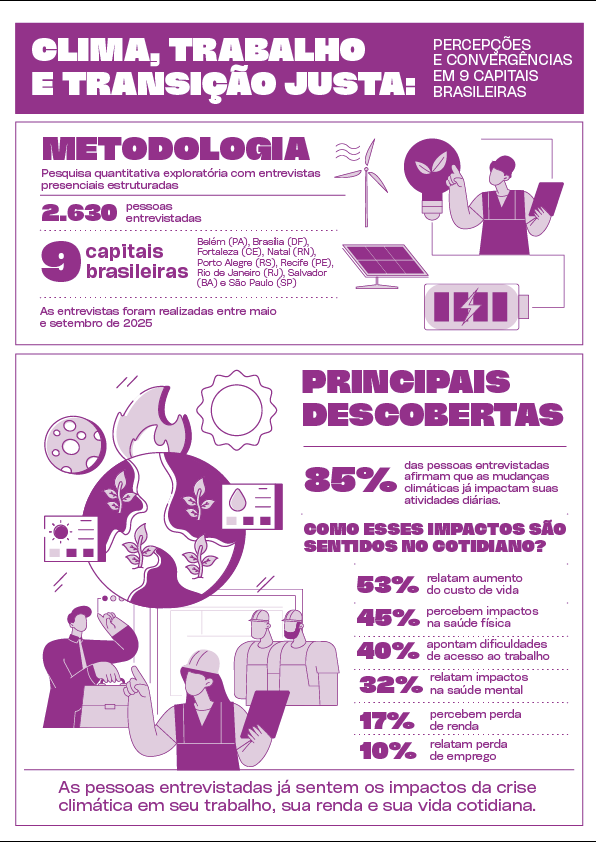
The research starts from the observation that the climate crisis is already a work issue, with direct consequences on the cost of living, physical and mental health, access to work, and income. The data confirms that 85% of those interviewed already feel these impacts in their daily lives . The working class recognizes the problem and hopes for transformation.

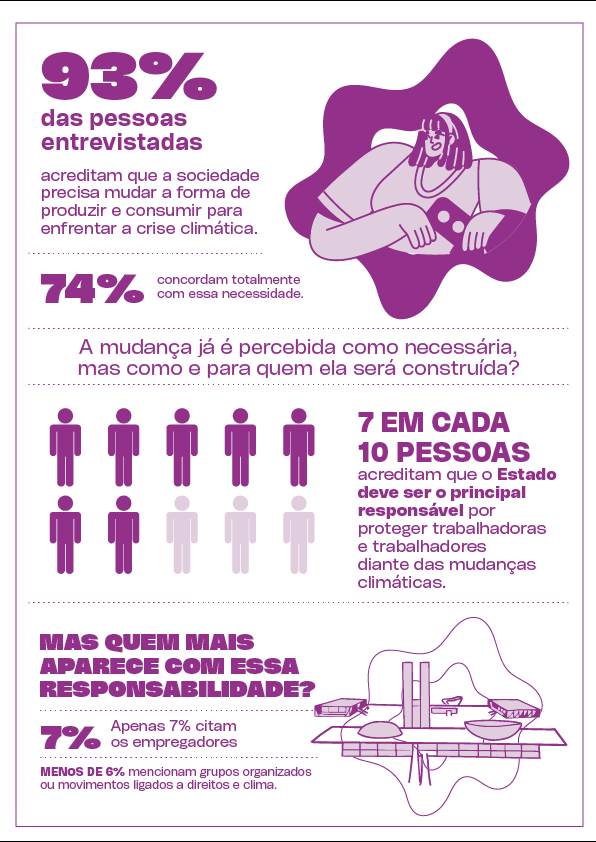
The findings also reveal that 93% of those interviewed agree that society needs to change the way it produces and consumes to address the climate crisis . The challenge, therefore, is no longer convincing people of the need for change. It is to debate how this change happens and for whom it will be built.

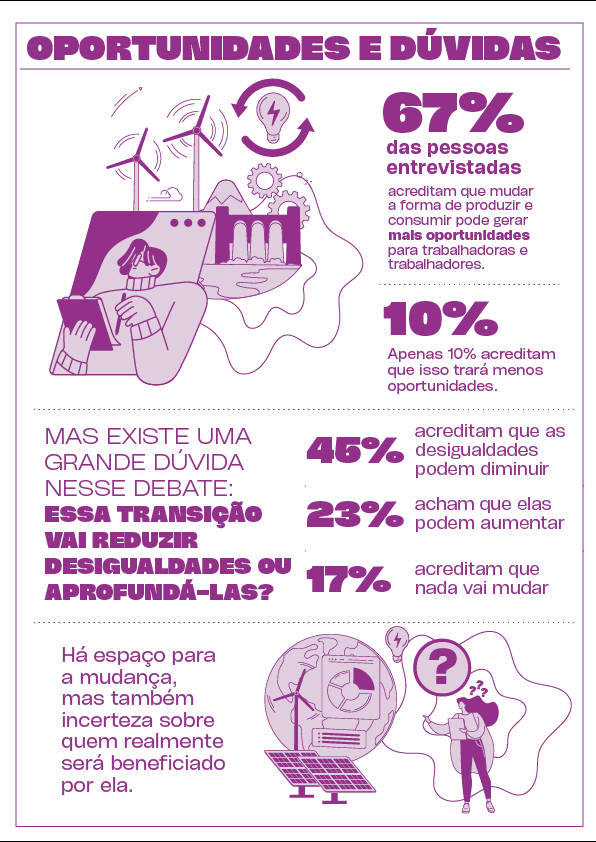
There is optimism about the opportunities generated by the transition, but also persistent skepticism about the distribution of its benefits. And there is clarity about who should lead the process: 7 out of 10 people expect the Brazilian state to guarantee the protection of workers along this path.

Talking about climate change is talking about work, income, and dignity. Building a just transition requires listening to those who already feel its impacts in their daily lives.

Produced by: Aurora Lab and More in Common